Let's Talk
CLOSE

How Endangered Species Chocolate Switched from Vendor Central and Grew Amazon Sales

A chocolate brand frustrated by seasonal PO limits switched from Vendor Central and grew sales 82%. The full story and transition lessons.

Endangered Species Chocolate had a problem most food brands eventually face on Amazon: seasonal shipping restrictions that clash with how Vendor Central actually works.

If you sell chocolate, you know Amazon won't take meltable inventory through FBA during peak summer months. That policy makes sense for logistics. But when you're operating through Vendor Central, you don't control the PO schedule. Amazon sends purchase orders when Amazon decides to. When those POs don't line up with fulfillment windows, you're stuck managing inconsistent demand, stranded inventory, and margin pressure you can't fix.

That's where Endangered Species Chocolate was in May 2018. Vendor Central wasn't giving them the control they needed. And they were about to launch a full rebrand.

Why Endangered Species Chocolate Needed a Different Amazon Model

Meltable-Goods Restrictions and PO Inconsistency

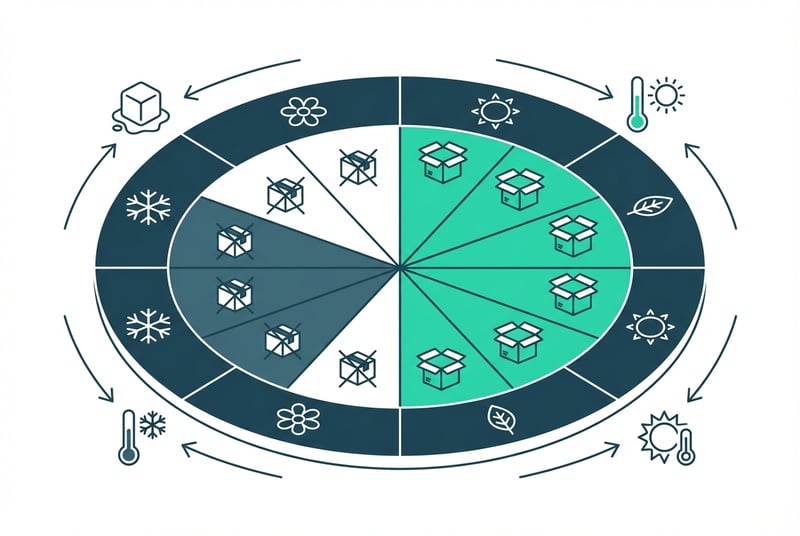
Chocolate melts. Amazon historically blocked meltable products from FBA fulfillment from May 1 through September 30 (updated in 2025 to allow earlier inbound but still limited customer fulfillment windows). If you're selling through Vendor Central, Amazon sends you purchase orders based on their forecast, not your shipping constraints. That disconnect creates problems:

  • You get a PO during a restricted period
  • You can't fulfill it on time
  • Inventory planning becomes a guessing game
  • You lose sales during peak summer traffic months

For a premium chocolate brand trying to grow, that's not a minor inconvenience. It's a structural problem.
Rebrand Timing Increased Execution Risk

At the same time, Endangered Species Chocolate was rebranding. New packaging. New photography. New storefront. New A+ content. New messaging across every customer touchpoint.

Executing a rebrand cleanly on Amazon requires tight coordination. You need to update listings, swap creative assets, refresh your storefront, realign your ad campaigns, and make sure the old branding doesn't linger in search results or customer-facing modules. If you're working through Vendor Central and don't control the listing, content deployment, or ad execution directly, that coordination gets harder.

The brand needed a model where they could move faster and control more of the execution. Vendor Central wasn't that model.

What Changed After the Move Away From Vendor Central

Endangered Species Chocolate chose a wholesale partnership with SupplyKick. The new model gave them more predictable ordering (single weekly POs instead of unpredictable Amazon forecasts), fully managed logistics, and a dedicated team focused on content, advertising, and storefront execution.

Logistics and Ordering Became Easier to Manage

The meltable-goods constraint didn't disappear. But with a more predictable PO schedule and direct logistics coordination, the brand could plan inventory around Amazon's fulfillment windows instead of reacting to inconsistent demand signals.

Brand Content, Storefront, and Ad Execution Improved

SupplyKick's team shot new product photography, rewrote all listing copy, rebuilt the A+ content modules, overhauled the brand storefront, and restructured the Amazon advertising strategy with tighter campaign targeting.

Because the brand had a partner managing execution instead of waiting on Vendor Central processes, the rebrand rollout happened faster and with fewer content gaps.

The Amazon Partnership Model Supported the Rebrand Launch

Chocolate is a crowded category on Amazon. Launching a rebrand in that environment without losing momentum requires speed and precision. The new operating model let Endangered Species move faster on content updates, adjust ad spend in real time, and keep the storefront aligned with the rebrand messaging without waiting on Amazon's internal timelines.

Results from the Transition

82%
Sales Growth
103%
Unit Growth
39%
Traffic Growth
32%
Above Plan

After moving off Vendor Central, Endangered Species Chocolate grew overall Amazon sales by 82%. Unit sales increased by 103%, meaning the brand wasn't just growing revenue. They were moving more product.

On-platform traffic increased by 39%, driven by stronger content, better storefront merchandising, and advertising optimization.

For Q1 and Q2 2019, Endangered Species Chocolate beat their internal sales plan by 32%. That's not just growth. That's growth ahead of forecast during a rebrand.

What Other Brands Can Learn from This Vendor Central Transition

When Vendor Central Starts Limiting Growth

Vendor Central makes sense for some brands. But it starts limiting growth when:

  • PO timing doesn't match your fulfillment constraints (seasonal products, meltables, supply chain lead times)
  • You need faster control over pricing, content, or ad execution than the 1P model allows
  • Margin pressure from wholesale terms outweighs the benefits of Amazon handling fulfillment
  • You're launching a rebrand, new product line, or market expansion and need tighter execution control

If any of those sound familiar, it's worth evaluating alternatives.

Signs a Hybrid or 3P Model May Be Worth Evaluating

You don't have to exit Vendor Central entirely. Some brands run hybrid models: core SKUs stay in 1P while new products, bundles, or margin-sensitive items move to a 3P-led setup. That gives you more control without cutting off the wholesale relationship completely.

Signs a hybrid or full 3P move might make sense:

  • You're spending more time managing PO issues than growing the business
  • Your pricing or promotions strategy doesn't align with how Amazon manages 1P accounts
  • You need better access to Brand Analytics, advertising tools, or content controls
  • Your category has seasonal or operational constraints that clash with 1P forecasting

Questions to Answer Before Making the Switch

If you're considering a move away from Vendor Central, answer these first:

  • What operating model are you moving to? (Self-managed Seller Central, partner-led 3P, hybrid 1P/3P)
  • How will you handle fulfillment? (FBA, FBM, 3PL)
  • What happens to your current listings, reviews, and sales rank?
  • How do you protect Brand Registry, A+ content, and storefront assets during the transition?
  • What's your plan for maintaining Buy Box control and ad continuity?
  • Do you have the internal team or partner support to manage the new operating model?

Answering those questions before you move prevents expensive mistakes mid-transition.

Vendor Central vs Seller Central: The Practical Tradeoffs

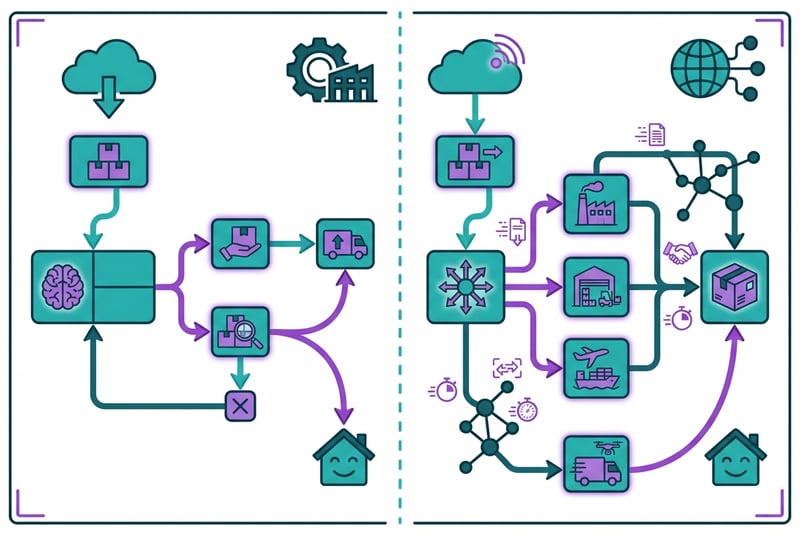
If you're researching a Vendor Central exit, here's what actually changes when you move to a 3P-led model (whether self-managed Seller Central or partner-led).
Pricing Control

Vendor Central: Amazon sets retail pricing. You sell wholesale, Amazon marks it up, and you have limited control over what customers see.

Seller Central / 3P: You control list price, sale pricing, and promotional timing. That gives you more flexibility, but you're also responsible for winning the Buy Box if other sellers are on your listings.

Inventory and Fulfillment Responsibility

Vendor Central: Amazon sends POs and manages fulfillment. You fill the POs, Amazon handles the rest.

Seller Central / 3P: You own replenishment decisions. You send inventory to FBA (or manage FBM), forecast demand, and handle stockouts. More control, more operational responsibility.

Buy Box and Advertising Implications

Vendor Central: Amazon usually wins the Buy Box on your listings because they own the inventory.

Seller Central / 3P: If you're the brand owner and manage your listings properly, you'll typically control the Buy Box. But you need to price competitively, maintain inventory, and monitor for unauthorized sellers.

Advertising strategy also shifts. In Vendor Central, Amazon may run their own campaigns on your products. In 3P, you control the ad budget, targeting, and creative.

Content and Brand Registry Considerations

Vendor Central: Amazon may manage some listing content. You can still use Brand Registry, but coordination can be slower.

Seller Central / 3P: If you're Brand Registry enrolled, you control A+ content, storefronts, brand analytics, and listing updates directly. Faster execution, but you're responsible for maintaining content quality.

During a transition, make sure Brand Registry, A+ modules, and storefront ownership are properly transferred or migrated. Sales history and reviews don't automatically follow you from 1P to 3P, so plan for that continuity gap.

Transition Checklist for Brands Considering a Move

If you're planning a Vendor Central exit, use this checklist to avoid common pitfalls.

Catalog and Listing Control

  • Confirm you control Brand Registry for your catalog
  • Identify which ASINs will move from 1P to 3P
  • Plan how to handle product listings, variations, and parent-child relationships
  • Decide whether to create new ASINs or migrate existing ones

Fulfillment Path and Prime Eligibility

  • Choose your fulfillment model: FBA, FBM, or 3PL
  • Verify Prime eligibility for your chosen fulfillment path
  • Plan inventory ramp-up timing to avoid stockouts during the switch
  • Account for seasonal restrictions if you sell meltables, hazmat, or oversized products

Margin and Fee Modeling

  • Compare wholesale terms under Vendor Central vs referral fees and FBA fees under Seller Central
  • Model cash flow changes (payment timing shifts from PO-based to sale-based)
  • Factor in new operational costs (advertising, inventory management, customer service)

Content, Reviews, and Ad Continuity

  • Migrate or recreate A+ content, storefront modules, and brand assets
  • Understand that reviews and sales rank may not transfer cleanly from 1P to 3P
  • Plan ad campaign migration and budget reallocation
  • Set up Brand Analytics access if moving from a 1P account that didn't have it

FAQ

Can You Switch from Vendor Central to Seller Central Without Losing Sales?

Short answer: not without some disruption.

Sales history, reviews, and ranking signals don't automatically transfer from 1P to 3P. If you move an ASIN from a Vendor Central account to a Seller Central account, you may see a temporary dip in ranking and conversion while the new account builds momentum.

The best way to minimize disruption:

  • Plan inventory carefully so you don't go out of stock during the switch
  • Maintain ad spend to protect traffic
  • Keep pricing and Prime eligibility consistent
  • Move during a lower-risk period (avoid peak season or major promotions)

Some brands run hybrid models to test 3P with new SKUs before moving core products.

Is a Hybrid 1P/3P Model Better Than a Full Switch?

It depends on your catalog, margins, and operational capacity.

A hybrid model lets you keep high-volume, low-touch SKUs in Vendor Central while moving margin-sensitive products, new launches, or seasonal items to 3P. That spreads risk and gives you more flexibility.

Downsides: you're managing two operating models, which adds complexity. You'll need to coordinate pricing, promotions, and advertising across both channels.

Hybrid models work best when:

  • You have a large catalog with different margin profiles
  • You want to test 3P without fully exiting 1P
  • You have the team or partner support to manage both channels

What Happens to Content and Brand Registry Assets During the Transition?

If you're Brand Registry enrolled, you should be able to maintain control over your listings, A+ content, and storefront. But the process isn't always automatic.

Before you switch:

  • Confirm Brand Registry ownership is tied to your brand, not the Vendor Central account
  • Export or document your existing A+ content and storefront modules
  • Plan how to recreate or migrate content to the new operating structure
  • Test that you can edit listings and deploy content under the new model before you go live

If your Brand Registry was set up through the Vendor Central account, work with Amazon support to transfer ownership before the switch. Don't assume it will just carry over.

What Changed Since 2019

When Endangered Species Chocolate made this move in 2018-2019, the Amazon environment looked different. Here's what matters for brands researching a similar transition today:

Seller Central has more brand tools now. In 2026, Seller Central offers direct access to Brand Analytics, A+ content, brand stores, Vine, and Brand Tailored Promotions. The gap between 1P and 3P brand-building tools has narrowed.

Vendor Central is still invite-only, but Amazon's 1P strategy has shifted. Amazon has spent the last few years reclassifying or reducing smaller vendor relationships. If you're in Vendor Central today, that doesn't mean you'll stay there indefinitely.

Meltable policy has evolved. Amazon updated the meltable-goods policy in 2025 to allow earlier FBA inbound (starting September 22, 2025) with customer fulfillment resuming October 13, 2025. The seasonal constraint still exists, but the timing and communication have improved. Still, if your business depends on summer sales, you need a plan that doesn't rely on guessing when Amazon's next PO will arrive.

Hybrid models are more common. The "all 1P or all 3P" binary has softened. More brands now run hybrid strategies, and Amazon's systems support that complexity better than they did in 2019.

Transition execution guides are more detailed. Current operator resources focus heavily on catalog migration, pricing continuity, Brand Registry handoffs, and sales-rank protection. If you're planning a move, you have better playbooks available now than brands did five years ago.

  

Evaluating a Move Away from Vendor Central?

Find out how a wholesale partnership with SupplyKick can simplify your Amazon transition and accelerate growth.

Let's Talk

How Endangered Species Chocolate Switched from Vendor Central and Grew Amazon Sales

SupplyKick
Oct 18, 2019 4:41:28 PM | Updated Mar 15, 2026

Endangered Species Chocolate had a problem most food brands eventually face on Amazon: seasonal shipping restrictions that clash with how Vendor Central actually works.

If you sell chocolate, you know Amazon won't take meltable inventory through FBA during peak summer months. That policy makes sense for logistics. But when you're operating through Vendor Central, you don't control the PO schedule. Amazon sends purchase orders when Amazon decides to. When those POs don't line up with fulfillment windows, you're stuck managing inconsistent demand, stranded inventory, and margin pressure you can't fix.

That's where Endangered Species Chocolate was in May 2018. Vendor Central wasn't giving them the control they needed. And they were about to launch a full rebrand.

Why Endangered Species Chocolate Needed a Different Amazon Model

Meltable-Goods Restrictions and PO Inconsistency

Chocolate melts. Amazon historically blocked meltable products from FBA fulfillment from May 1 through September 30 (updated in 2025 to allow earlier inbound but still limited customer fulfillment windows). If you're selling through Vendor Central, Amazon sends you purchase orders based on their forecast, not your shipping constraints. That disconnect creates problems:

  • You get a PO during a restricted period
  • You can't fulfill it on time
  • Inventory planning becomes a guessing game
  • You lose sales during peak summer traffic months

For a premium chocolate brand trying to grow, that's not a minor inconvenience. It's a structural problem.

Rebrand Timing Increased Execution Risk

At the same time, Endangered Species Chocolate was rebranding. New packaging. New photography. New storefront. New A+ content. New messaging across every customer touchpoint.

Executing a rebrand cleanly on Amazon requires tight coordination. You need to update listings, swap creative assets, refresh your storefront, realign your ad campaigns, and make sure the old branding doesn't linger in search results or customer-facing modules. If you're working through Vendor Central and don't control the listing, content deployment, or ad execution directly, that coordination gets harder.

The brand needed a model where they could move faster and control more of the execution. Vendor Central wasn't that model.

What Changed After the Move Away From Vendor Central

Endangered Species Chocolate chose a wholesale partnership with SupplyKick. The new model gave them more predictable ordering (single weekly POs instead of unpredictable Amazon forecasts), fully managed logistics, and a dedicated team focused on content, advertising, and storefront execution.

Logistics and Ordering Became Easier to Manage

The meltable-goods constraint didn't disappear. But with a more predictable PO schedule and direct logistics coordination, the brand could plan inventory around Amazon's fulfillment windows instead of reacting to inconsistent demand signals.

Brand Content, Storefront, and Ad Execution Improved

SupplyKick's team shot new product photography, rewrote all listing copy, rebuilt the A+ content modules, overhauled the brand storefront, and restructured the Amazon advertising strategy with tighter campaign targeting.

Because the brand had a partner managing execution instead of waiting on Vendor Central processes, the rebrand rollout happened faster and with fewer content gaps.

The Amazon Partnership Model Supported the Rebrand Launch

Chocolate is a crowded category on Amazon. Launching a rebrand in that environment without losing momentum requires speed and precision. The new operating model let Endangered Species move faster on content updates, adjust ad spend in real time, and keep the storefront aligned with the rebrand messaging without waiting on Amazon's internal timelines.

Results from the Transition

82%
Sales Growth
103%
Unit Growth
39%
Traffic Growth
32%
Above Plan

After moving off Vendor Central, Endangered Species Chocolate grew overall Amazon sales by 82%. Unit sales increased by 103%, meaning the brand wasn't just growing revenue. They were moving more product.

On-platform traffic increased by 39%, driven by stronger content, better storefront merchandising, and advertising optimization.

For Q1 and Q2 2019, Endangered Species Chocolate beat their internal sales plan by 32%. That's not just growth. That's growth ahead of forecast during a rebrand.

What Other Brands Can Learn from This Vendor Central Transition

When Vendor Central Starts Limiting Growth

Vendor Central makes sense for some brands. But it starts limiting growth when:

  • PO timing doesn't match your fulfillment constraints (seasonal products, meltables, supply chain lead times)
  • You need faster control over pricing, content, or ad execution than the 1P model allows
  • Margin pressure from wholesale terms outweighs the benefits of Amazon handling fulfillment
  • You're launching a rebrand, new product line, or market expansion and need tighter execution control

If any of those sound familiar, it's worth evaluating alternatives.

Signs a Hybrid or 3P Model May Be Worth Evaluating

You don't have to exit Vendor Central entirely. Some brands run hybrid models: core SKUs stay in 1P while new products, bundles, or margin-sensitive items move to a 3P-led setup. That gives you more control without cutting off the wholesale relationship completely.

Signs a hybrid or full 3P move might make sense:

  • You're spending more time managing PO issues than growing the business
  • Your pricing or promotions strategy doesn't align with how Amazon manages 1P accounts
  • You need better access to Brand Analytics, advertising tools, or content controls
  • Your category has seasonal or operational constraints that clash with 1P forecasting

Questions to Answer Before Making the Switch

If you're considering a move away from Vendor Central, answer these first:

  • What operating model are you moving to? (Self-managed Seller Central, partner-led 3P, hybrid 1P/3P)
  • How will you handle fulfillment? (FBA, FBM, 3PL)
  • What happens to your current listings, reviews, and sales rank?
  • How do you protect Brand Registry, A+ content, and storefront assets during the transition?
  • What's your plan for maintaining Buy Box control and ad continuity?
  • Do you have the internal team or partner support to manage the new operating model?

Answering those questions before you move prevents expensive mistakes mid-transition.

Vendor Central vs Seller Central: The Practical Tradeoffs

If you're researching a Vendor Central exit, here's what actually changes when you move to a 3P-led model (whether self-managed Seller Central or partner-led).

Pricing Control

Vendor Central: Amazon sets retail pricing. You sell wholesale, Amazon marks it up, and you have limited control over what customers see.

Seller Central / 3P: You control list price, sale pricing, and promotional timing. That gives you more flexibility, but you're also responsible for winning the Buy Box if other sellers are on your listings.

Inventory and Fulfillment Responsibility

Vendor Central: Amazon sends POs and manages fulfillment. You fill the POs, Amazon handles the rest.

Seller Central / 3P: You own replenishment decisions. You send inventory to FBA (or manage FBM), forecast demand, and handle stockouts. More control, more operational responsibility.

Buy Box and Advertising Implications

Vendor Central: Amazon usually wins the Buy Box on your listings because they own the inventory.

Seller Central / 3P: If you're the brand owner and manage your listings properly, you'll typically control the Buy Box. But you need to price competitively, maintain inventory, and monitor for unauthorized sellers.

Advertising strategy also shifts. In Vendor Central, Amazon may run their own campaigns on your products. In 3P, you control the ad budget, targeting, and creative.

Content and Brand Registry Considerations

Vendor Central: Amazon may manage some listing content. You can still use Brand Registry, but coordination can be slower.

Seller Central / 3P: If you're Brand Registry enrolled, you control A+ content, storefronts, brand analytics, and listing updates directly. Faster execution, but you're responsible for maintaining content quality.

During a transition, make sure Brand Registry, A+ modules, and storefront ownership are properly transferred or migrated. Sales history and reviews don't automatically follow you from 1P to 3P, so plan for that continuity gap.

Transition Checklist for Brands Considering a Move

If you're planning a Vendor Central exit, use this checklist to avoid common pitfalls.

Catalog and Listing Control

  • Confirm you control Brand Registry for your catalog
  • Identify which ASINs will move from 1P to 3P
  • Plan how to handle product listings, variations, and parent-child relationships
  • Decide whether to create new ASINs or migrate existing ones

Fulfillment Path and Prime Eligibility

  • Choose your fulfillment model: FBA, FBM, or 3PL
  • Verify Prime eligibility for your chosen fulfillment path
  • Plan inventory ramp-up timing to avoid stockouts during the switch
  • Account for seasonal restrictions if you sell meltables, hazmat, or oversized products

Margin and Fee Modeling

  • Compare wholesale terms under Vendor Central vs referral fees and FBA fees under Seller Central
  • Model cash flow changes (payment timing shifts from PO-based to sale-based)
  • Factor in new operational costs (advertising, inventory management, customer service)

Content, Reviews, and Ad Continuity

  • Migrate or recreate A+ content, storefront modules, and brand assets
  • Understand that reviews and sales rank may not transfer cleanly from 1P to 3P
  • Plan ad campaign migration and budget reallocation
  • Set up Brand Analytics access if moving from a 1P account that didn't have it

FAQ

Can You Switch from Vendor Central to Seller Central Without Losing Sales?

Short answer: not without some disruption.

Sales history, reviews, and ranking signals don't automatically transfer from 1P to 3P. If you move an ASIN from a Vendor Central account to a Seller Central account, you may see a temporary dip in ranking and conversion while the new account builds momentum.

The best way to minimize disruption:

  • Plan inventory carefully so you don't go out of stock during the switch
  • Maintain ad spend to protect traffic
  • Keep pricing and Prime eligibility consistent
  • Move during a lower-risk period (avoid peak season or major promotions)

Some brands run hybrid models to test 3P with new SKUs before moving core products.

Is a Hybrid 1P/3P Model Better Than a Full Switch?

It depends on your catalog, margins, and operational capacity.

A hybrid model lets you keep high-volume, low-touch SKUs in Vendor Central while moving margin-sensitive products, new launches, or seasonal items to 3P. That spreads risk and gives you more flexibility.

Downsides: you're managing two operating models, which adds complexity. You'll need to coordinate pricing, promotions, and advertising across both channels.

Hybrid models work best when:

  • You have a large catalog with different margin profiles
  • You want to test 3P without fully exiting 1P
  • You have the team or partner support to manage both channels

What Happens to Content and Brand Registry Assets During the Transition?

If you're Brand Registry enrolled, you should be able to maintain control over your listings, A+ content, and storefront. But the process isn't always automatic.

Before you switch:

  • Confirm Brand Registry ownership is tied to your brand, not the Vendor Central account
  • Export or document your existing A+ content and storefront modules
  • Plan how to recreate or migrate content to the new operating structure
  • Test that you can edit listings and deploy content under the new model before you go live

If your Brand Registry was set up through the Vendor Central account, work with Amazon support to transfer ownership before the switch. Don't assume it will just carry over.

What Changed Since 2019

When Endangered Species Chocolate made this move in 2018-2019, the Amazon environment looked different. Here's what matters for brands researching a similar transition today:

Seller Central has more brand tools now. In 2026, Seller Central offers direct access to Brand Analytics, A+ content, brand stores, Vine, and Brand Tailored Promotions. The gap between 1P and 3P brand-building tools has narrowed.

Vendor Central is still invite-only, but Amazon's 1P strategy has shifted. Amazon has spent the last few years reclassifying or reducing smaller vendor relationships. If you're in Vendor Central today, that doesn't mean you'll stay there indefinitely.

Meltable policy has evolved. Amazon updated the meltable-goods policy in 2025 to allow earlier FBA inbound (starting September 22, 2025) with customer fulfillment resuming October 13, 2025. The seasonal constraint still exists, but the timing and communication have improved. Still, if your business depends on summer sales, you need a plan that doesn't rely on guessing when Amazon's next PO will arrive.

Hybrid models are more common. The "all 1P or all 3P" binary has softened. More brands now run hybrid strategies, and Amazon's systems support that complexity better than they did in 2019.

Transition execution guides are more detailed. Current operator resources focus heavily on catalog migration, pricing continuity, Brand Registry handoffs, and sales-rank protection. If you're planning a move, you have better playbooks available now than brands did five years ago.


Evaluating a Move Away from Vendor Central?

Find out how a wholesale partnership with SupplyKick can simplify your Amazon transition and accelerate growth.

Let's Talk
SupplyKick Newsletter: Amazon Growth Strategies and News

Stay up to date with all things Amazon.

Sign up to receive our newsletter for growth strategies, important updates, inventory and policy changes, and best practices.