/Logos/SupplyKick_Logo.svg "SupplyKick_Logo")


Should your brand offer Amazon checkout and fulfillment on your own site?
Buy with Prime lets shoppers use their Amazon account, Prime delivery, and Amazon reviews when purchasing from your DTC store. Amazon handles fulfillment, returns, and post-order support. You get faster shipping promises, a trusted checkout layer, and access to Amazon's review proof without sending customers to Amazon.com.
That sounds good. The friction shows up in fee stacking, margin pressure, Shopify app reliability, and the need to test against your existing checkout before committing sitewide.
This guide walks through who qualifies now, how the Shopify workflow works, what the fee stack includes, where the program delivers lift, and when you should skip it.
What Is Buy with Prime?
Buy with Prime is a checkout and fulfillment program that brings Amazon Prime delivery, returns, and customer service to a brand's own website.
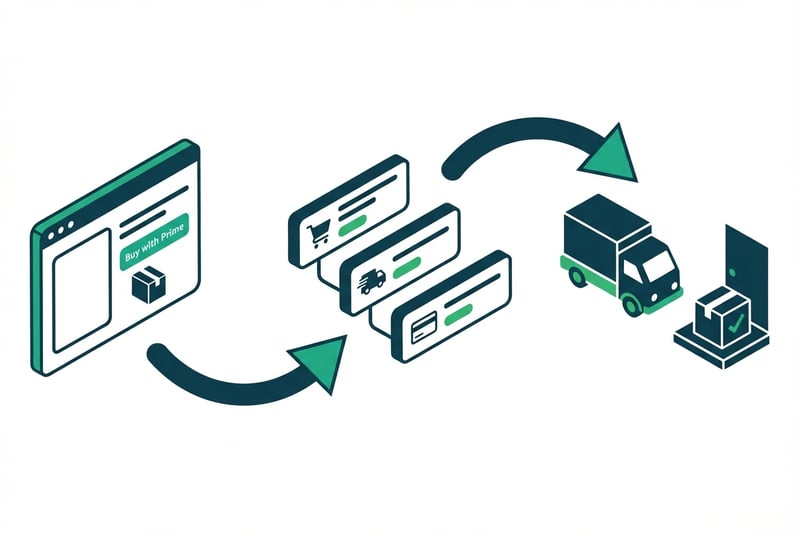
How the Checkout Experience Works
When a shopper clicks the "Buy with Prime" button on your product page, they enter an Amazon-hosted checkout experience. They log in with their Amazon account, see their saved payment and shipping info, and complete the purchase. After checkout, they return to your site.
The shopper receives order tracking, delivery notifications, and access to Amazon's return flow. They can also see Amazon reviews for the product directly on your site before purchasing.
Buy with Prime does not replace your native checkout. It runs alongside whatever checkout you already offer.
What Shoppers See on the Site
Product pages display the Prime logo, a delivery estimate, and a "Buy with Prime" button. If you enable Reviews from Amazon, shoppers also see Amazon star ratings and review snippets on the product page.
Amazon now supports Buy with Prime cart, which lets shoppers add up to 20 Prime-eligible items in one transaction. This is no longer just a buy-now button.
What Amazon Handles After Purchase
Amazon manages fulfillment, shipping, order tracking, returns, and customer service.
Returns flow through Amazon's label-free and box-free options where available. Refunds process automatically. Amazon's Buy with Prime Assist team handles post-order customer service at no added cost.
Your brand still gets shopper data. Amazon shares name, email, shipping address, and phone number with you after purchase.
Who Can Use Buy with Prime in 2026?
Eligibility Requirements for U.S. Merchants
To offer Buy with Prime, you need:
- Amazon fulfillment services: Your inventory must be stored in Amazon fulfillment centers. This can be through FBA, Multi-Channel Fulfillment (MCF), or Amazon Supply Chain.
- Amazon Pay: This provides the checkout layer.
- A Seller Central account or Amazon Supply Chain account: This connects your product catalog to Buy with Prime.
Buy with Prime is currently available only to U.S.-based merchants selling to U.S. customers.
Can You Use It Without Selling on Amazon.com?
Yes, but not without Amazon fulfillment.
Amazon now says brands can offer Buy with Prime for products not sold on Amazon.com. The requirement is that you create an Amazon Supply Chain account and place inventory in Amazon fulfillment centers.
This is not a path around Amazon's operational footprint. You still need to use Amazon's fulfillment network and follow Amazon's fulfillment rules. You just avoid listing the product publicly on Amazon.com.
When Buy with Prime Is Not a Fit
Skip Buy with Prime if:
- Your products are too heavy or bulky for Amazon fulfillment fees to make economic sense.
- Your current DTC checkout already converts well, your shipping promise is competitive, and your return rate is low.
- You run thin margins and cannot absorb the layered fee stack without raising prices.
- You want full control over post-purchase policy, customer service scripts, and returns handling.
- You do not want to hold inventory in Amazon fulfillment centers or create an Amazon Supply Chain account.
- Your operational team is small and cannot manage catalog sync issues or app troubleshooting.
How Buy with Prime Works for Brands
Fulfillment and Returns
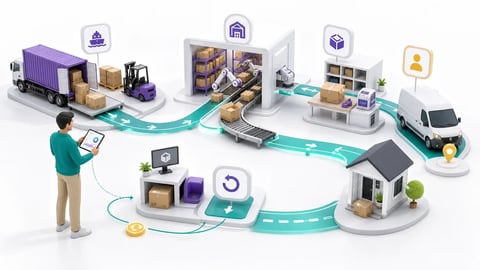
Amazon picks, packs, and ships orders placed through Buy with Prime using the same fulfillment network that serves Amazon.com. Shoppers see Prime delivery estimates on your product page.
Returns follow Amazon's Prime returns policy. Amazon provides prepaid return labels. In some locations, shoppers can use label-free or box-free returns at Amazon drop-off points.
You do not control the returns policy. Amazon does.
Reviews from Amazon
If you enable Reviews from Amazon, your product page displays Amazon star ratings and customer reviews pulled from Amazon.com.
Amazon says merchants using this feature saw an average conversion lift of 38%. That number comes from Amazon and reflects average performance, not a guaranteed outcome.
Reviews are read-only on your site. Shoppers cannot submit new reviews through your DTC store. Only Amazon.com customers who have spent at least $50 on Amazon in the past 12 months can leave reviews.
Customer Service and Order Tracking
Amazon's Buy with Prime Assist team handles post-order customer service for Buy with Prime orders. This includes order questions, delivery issues, and return requests.
Shoppers receive delivery notifications and can track orders through Amazon's system. Your brand does not run the support queue for these orders.
Customer Data Shared with the Merchant
Amazon shares shopper name, email address, shipping address, and phone number with you after purchase.
You can use this data for post-purchase emails, retargeting, and loyalty programs. Amazon has historically guarded this data on Amazon.com orders, so this represents a meaningful shift for brands using the program.
Buy with Prime Pricing and Cost Considerations
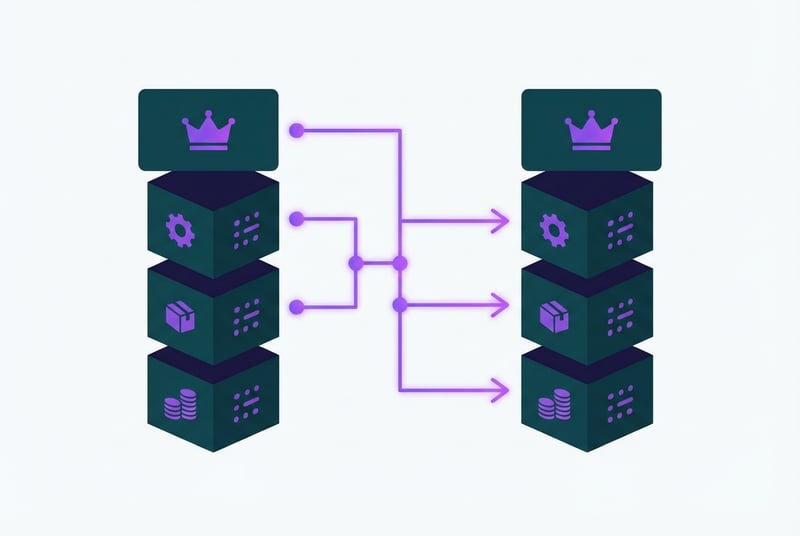
Buy with Prime is not one fee. It is a stack.
Amazon published a 2026 rate card effective January 15, 2026. The exact fee breakdown depends on product dimensions, weight, order value, and whether you use Shopify or a custom integration.
Note: If you use the Shopify app, Amazon Pay payment fees do not apply, but Shopify's own payment fees may.
Margin Questions to Answer Before Rollout
Does the fee stack fit your unit economics?
If you sell a $20 product with a 30% margin, adding a 3% service fee, 2.4% payment fee, and $5.60+ fulfillment fee will compress your contribution margin fast. High-AOV products with stronger margin profiles absorb the fees more easily.
Does higher conversion offset the added cost?
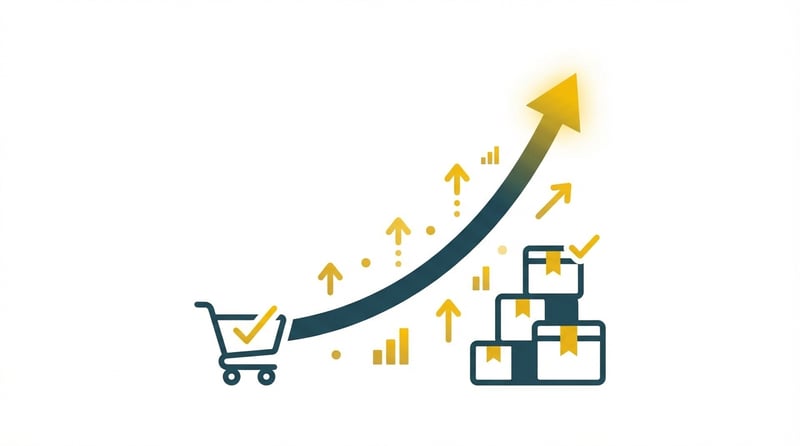
Amazon claims an average 25% conversion lift. If your current native checkout converts at 2%, Buy with Prime might push that to 2.5%. But only if your existing checkout is the bottleneck. If your site already converts well, the lift may be smaller.
Does cart functionality improve your AOV and units per order?
Amazon says early merchants saw a 15% increase in units per order after adding cart. Higher units per order can reduce per-order fulfillment cost, but only if your product mix supports multi-item purchases.
Do you have inventory velocity to justify the added storage cost?
Slow-moving inventory in Amazon fulfillment centers racks up storage fees. If your SKUs turn slowly, Buy with Prime may not be worth the added holding cost.
Buy with Prime Pros and Cons
- Trusted checkout reduces friction. Shoppers recognize the Prime logo. They already have payment and shipping info saved. Checkout is faster.
- Fast, free delivery is a strong incentive. If your current shipping promise is slower or costs money, Prime delivery can close more sales.
- Amazon reviews on-site keep shoppers from bouncing. If your product has strong Amazon reviews but weak on-site proof, displaying those reviews can reduce purchase hesitation.
- New-customer acquisition improves. Amazon reports that 75% of Buy with Prime orders come from new shoppers.
- Fee stacking eats margin. Service fee, payment fee, fulfillment fee, and storage fees add up fast. Low-margin products may not survive the stack.
- You do not control the post-purchase experience. Amazon owns returns policy, customer service scripts, and refund handling.
- Catalog sync and app bugs can break order flow. The Shopify app has mixed reviews. Positive reviews cite better conversion. Negative reviews cite stuck orders and slow support.
- You still need Amazon fulfillment. Even without selling on Amazon.com, you must place inventory in fulfillment centers.
Tradeoffs Versus Native Checkout
If your current checkout already converts well, Buy with Prime has to beat a strong baseline, not save a broken one.
Shop Pay, Apple Pay, and other fast-checkout options also reduce friction. Buy with Prime is not the only way to simplify checkout.
The question is whether Prime trust, delivery speed, and review proof deliver enough lift to justify the fee stack and operational dependency.
Test on a subset of SKUs first. Measure conversion, AOV, units per order, contribution margin, and return rate before expanding sitewide.
Buy with Prime and Shopify
Integration Workflow
Amazon offers a combined MCF and Buy with Prime app for Shopify. The app lets you manage catalog, orders, and returns from Shopify admin.
You can enable Buy with Prime on specific products, sync inventory between Shopify and Amazon fulfillment centers, and handle mixed carts (some items fulfilled by Buy with Prime, others by your existing setup).
The app supports cart functionality. Shoppers can add multiple Prime-eligible products in one order.
Amazon also supports custom integrations for brands not on Shopify. Setup is more technical and may require developer work.
Catalog, Order, and Returns Considerations
- Catalog sync: Product data must flow from your ecommerce platform to Buy with Prime. SKU mismatches, pricing discrepancies, or inventory lag can break the experience.
- Order routing: Orders placed through Buy with Prime route to Amazon fulfillment. Orders placed through your native checkout route to your existing fulfillment setup. You need clean order management to avoid confusion.
- Returns handling: Buy with Prime returns go back to Amazon. Native checkout returns follow your own process. Your support team needs to know which system handles each order.
Testing Buy with Prime Without Breaking the Rest of the Site
Start with a small SKU set. Pick hero products with strong Amazon review proof, fast inventory turn, and healthy margins.
Enable Buy with Prime on those products only. Keep your native checkout available. Track conversion lift, AOV, margin impact, and customer feedback.
If results justify expansion, add more SKUs. If results are weak or margin pressure is too high, pull back without disrupting the rest of your site.
Should Your Brand Use Buy with Prime?
Best-Fit Brand Profiles
- You already use FBA or Amazon Supply Chain. You have inventory in Amazon fulfillment centers. Setup is easier.
- Your current DTC shipping promise is slow or expensive. Prime delivery gives you a competitive edge you do not have today.
- Your products have strong Amazon reviews but weak on-site proof. Displaying those reviews on your site can close the trust gap.
- Your checkout conversion is low. If friction or trust issues hold back your native checkout, Buy with Prime may help.
- Your product mix supports multi-item orders. Cart functionality can lift AOV and improve per-order economics.
Cases Where Brands Should Wait
- Your native checkout already converts well. If your existing setup works, the lift may not justify the cost.
- Your margins are thin. Fee stacking will hurt.
- You run high return rates. Amazon's automated returns flow will process refunds fast, but that eats margin.
- You want full control over post-purchase experience. Amazon owns the customer service and returns process for Buy with Prime orders.
- Your operational team is small and stretched. Catalog sync issues, app bugs, and order routing complexity require support capacity.
KPIs to Track in the First 60 to 90 Days
| KPI | What to Measure |
|---|---|
| Conversion Rate | Compare Buy with Prime products to similar SKUs using native checkout. |
| Revenue per Shopper | Are Buy with Prime customers spending more per visit? |
| AOV | Is cart functionality lifting order size? |
| Units per Order | Are shoppers adding more items per transaction? |
| Contribution Margin | After all fees, what margin is left on Buy with Prime orders? |
| Return Rate | Are returns higher, lower, or the same as native checkout orders? |
| Support Tickets | Are Buy with Prime orders generating fewer tickets, or are sync/routing issues emerging? |
| Repeat Purchase Rate | Do Buy with Prime customers come back and buy again? |
Track these metrics by SKU. If Buy with Prime lifts performance on high-margin hero products but drags down margin on low-AOV SKUs, adjust your catalog strategy.
How to Get Started
Setup Checklist
- Confirm you have inventory in Amazon fulfillment centers (FBA, MCF, or Amazon Supply Chain).
- Create or confirm your Seller Central or Amazon Supply Chain account.
- Sign up for Buy with Prime at buywithprime.amazon.com.
- Link your Seller Central and Amazon Pay accounts to Buy with Prime.
- Import your product catalog.
- Select which products should display the Prime logo and Buy with Prime button.
- If using Shopify, install the Amazon MCF and Buy with Prime app from the Shopify App Store.
- If using a custom integration, copy and paste Amazon's button code into your product pages.
- Test checkout flow, order routing, and returns handling before going live.
- Enable Reviews from Amazon if you want Amazon reviews displayed on your site.
Implementation Notes for Product Pages
Amazon provides button code and integration docs in the Buy with Prime Knowledge Center.
For Shopify, the app handles most of the product-page setup automatically. You still need to verify that the Prime logo, delivery estimate, and reviews display correctly.
For custom integrations, work with your development team to place the button code, style it to fit your site, and test the checkout handoff.
Where SupplyKick can help: SupplyKick is an official Buy with Prime Agency Partner. We help brands evaluate whether Buy with Prime fits their business model, set up the program correctly, manage catalog sync and order routing, and measure performance against clear KPIs. Connect with our team to discuss whether Buy with Prime makes sense for your brand.
FAQ
Do you need Amazon FBA or Amazon Supply Chain?
Yes. Your inventory must be stored in Amazon fulfillment centers to use Buy with Prime. You can use FBA, Multi-Channel Fulfillment, or Amazon Supply Chain. Amazon says brands can offer Buy with Prime without selling the product on Amazon.com, but they still need to create an Amazon Supply Chain account and place inventory in fulfillment centers.
Can shoppers use promo codes?
Promo code support through Buy with Prime is limited. Check Amazon's current documentation before building a promotion strategy that depends on discount codes at checkout.
Does Buy with Prime affect your Amazon marketplace business?
Only if you choose to sell the same products on both your DTC site and Amazon.com. If you use Buy with Prime without listing the product on Amazon.com, your marketplace business is unaffected. If you sell the same SKU on both channels, shoppers can compare pricing and delivery promises. Make sure your pricing and inventory strategy account for that.
Can you remove it if results are weak?
Yes. You can disable Buy with Prime on specific products or turn it off sitewide. If results do not justify the cost, pull back. Your native checkout remains in place.
Last updated: March 2026



/Logos/SupplyKick/SupplyKick-Logo_White.svg "SupplyKick-Logo_White")