Let's Talk
CLOSE
Blog Marketing

Amazon Buyer-Seller Messaging Guidelines: What Sellers Can and Can't Send

Learn what Amazon buyer-seller messaging guidelines allow, what gets messages blocked, and how sellers can stay compliant without losing customer communication.

Amazon controls when sellers can contact buyers, what messages are allowed, and what language gets blocked. Send the wrong message and Amazon may restrict your account to pre-approved templates or suspend selling privileges entirely.

This guide explains what Amazon permits, what triggers blocks, and when sellers should use Amazon's Request a Review tool instead of writing custom copy.

What Amazon Buyer-Seller Messaging Rules Actually Cover

Amazon divides seller-to-buyer communication into two categories: necessary permitted messages and proactive permitted messages. The difference matters because Amazon already handles much of the post-purchase communication sellers used to send themselves.
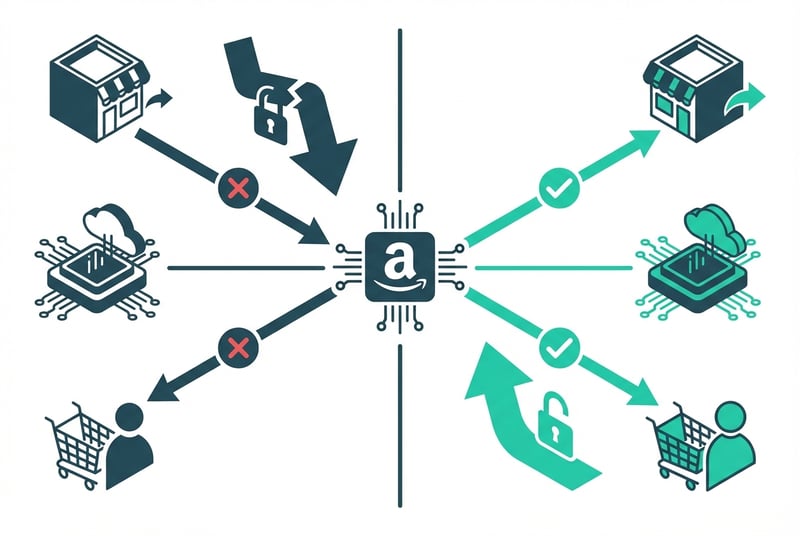
Diagram showing Amazon seller messaging categories: necessary permitted messages vs proactive permitted messages

Necessary permitted messages vs. proactive permitted messages

Necessary permitted messages are communications required to complete an order or respond to a customer service inquiry. These include:

  • Answering a buyer question about product details, shipping, or returns
  • Resolving an order issue flagged by the buyer
  • Responding to a service request

Amazon expects these messages to be reactive, not promotional.

Proactive permitted messages are seller-initiated communications that Amazon allows within strict limits. These include:

  • Resolving an issue with order fulfillment
  • Requesting additional information needed to complete the order
  • Asking a return-related question
  • Sending an invoice
  • Requesting product review or seller feedback
  • Scheduling delivery for a heavy or bulky item
  • Verifying a custom design
  • Scheduling a Home Services appointment
  • Other contact required for the buyer to receive the purchase

Proactive messages are not banned, but they must follow specific rules.

Why Amazon tightened buyer communication rules

Amazon now sends order confirmations, shipping updates, and delivery notifications directly to buyers. Sellers cannot duplicate that communication. The goal is to stop sellers from treating post-purchase messaging as a marketing channel and to reduce buyer inbox clutter.

Sellers who ignore these rules risk message blocking, loss of proactive messaging privileges, or account suspension.

What Amazon Sellers Are Allowed to Send

Order-related and customer-service messages

Sellers can send messages when the buyer needs information to receive the order or when the seller needs information to complete fulfillment.

Allowed scenarios:

  • Buyer's address is incomplete or undeliverable, and the seller needs clarification before shipping
  • Heavy or bulky item requires delivery scheduling
  • Custom product requires design verification before production
  • Return requires additional information to process refund
  • Buyer asked a question and the seller is responding

These messages must be order-specific. Generic thank-you notes or promotional follow-ups do not qualify.

Review and seller feedback requests

Sellers can request product reviews and seller feedback, but only through compliant methods.

Amazon's Request a Review button in Seller Central is the safest option. It sends a pre-approved message asking for both product review and seller feedback. Seller Central guidance states this tool can be used once per order, between 5 and 30 days after delivery.

Sellers can also request reviews through custom buyer-seller messages, but only if the message meets all proactive message requirements and does not manipulate, incentivize, or selectively target happy buyers.

Timing, order ID, and preferred-language requirements

Proactive permitted messages must meet three non-negotiable rules:

  • Sent within 30 days of order completion
  • Include the 17-digit order ID
  • Use the buyer's language of preference

Messages that violate any of these requirements may be blocked automatically.

What Is Not Allowed in Amazon Buyer-Seller Messages
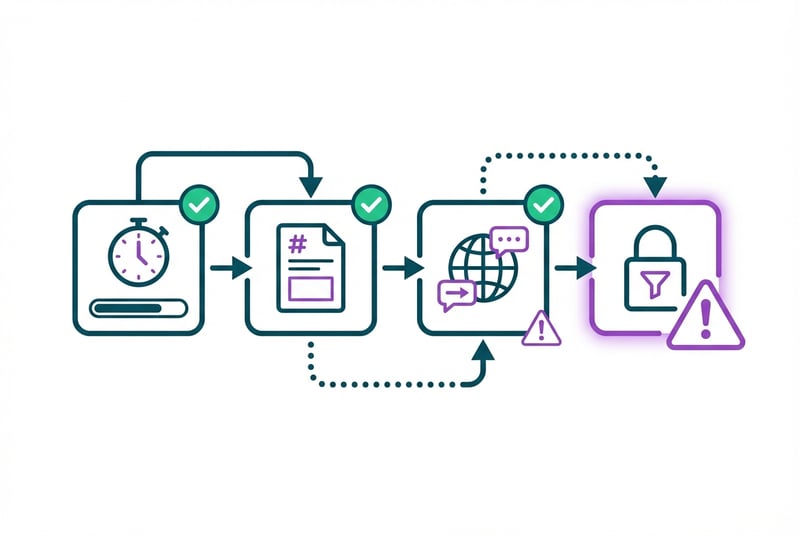
Amazon messaging compliance checklist showing timing requirements, order ID rules, and content restrictions

Promotional language, incentives, and review manipulation

Amazon prohibits messages that:

  • Ask only happy buyers for reviews
  • Offer compensation, discounts, or free products in exchange for reviews
  • Ask buyers to remove or change an existing review
  • Encourage buyers to send negative feedback privately to the seller instead of posting it publicly
  • Include promotional offers unrelated to the order

Risky example: "If you love the product, please leave a 5-star review! If you have any issues, contact us first and we'll make it right."

Why it's risky: This steers negative feedback away from public reviews, which violates Amazon's anti-manipulation policy.

Compliant alternative: "Please share your feedback on the product using the link below."

External links, contact info, and attachments

Messages cannot include:

  • Links to websites outside Amazon (except links required for order completion that point to Amazon domains)
  • Email addresses, phone numbers, or social media handles
  • Attachments unless required for order fulfillment
  • Tracking pixels or embedded scripts

Amazon wants all buyer-seller interaction to stay inside Amazon's ecosystem.

Emojis, GIFs, formatting overrides, and accessibility issues

Messages cannot include:

  • Emojis or emoticons
  • GIFs or images (unless the image is required for order completion)
  • Centered text or custom formatting that overrides default text styles
  • Message margins wider than 20% of the available width
  • More than two line breaks between paragraphs
  • Alt text or accessibility elements that hide promotional content

These restrictions exist to keep messages readable, accessible, and free of marketing tricks.

Request a Review vs. Custom Buyer-Seller Messages

When Request a Review is the safer choice

Use Amazon's Request a Review button when:

  • The only goal is to get product reviews or seller feedback
  • You want zero risk of policy violation
  • You don't need custom copy
  • The order is between 5 and 30 days past delivery

Request a Review sends a pre-approved message that asks for both product review and seller feedback. Amazon controls the copy, the timing window, and the compliance. Sellers just click the button.

When sellers still need custom messages

Use a custom buyer-seller message when:

  • The buyer's address is unclear and you need clarification before shipping
  • A heavy item requires delivery scheduling
  • A custom product needs design confirmation
  • A return requires additional information
  • The buyer asked a question and you're responding

Custom messages are allowed, but only when the message serves an order-completion or customer-service purpose.

Common mistakes that trigger blocked messages

Mistake 1: Sending a generic thank-you note with no order-related purpose. Why it's blocked: Amazon already sends order confirmations. Duplicate communication is not permitted.

Mistake 2: Sending a review request before the 5-day post-delivery window or after the 30-day cutoff. Why it's blocked: Proactive messages must fall within the 30-day window, and review requests work best after the buyer has received and used the product.

Mistake 3: Including an external link to a warranty registration page or a feedback form hosted outside Amazon. Why it's blocked: External links are prohibited unless required for order completion and pointing to Amazon.

Mistake 4: Asking buyers to "contact us if there's a problem, otherwise leave a review." Why it's blocked: This language diverts negative feedback away from public reviews, which violates review-manipulation rules.

Practical Compliance Examples for Amazon Sellers

Examples of compliant messages

Scenario: Address verification before shipment

"Hello, we're preparing to ship your order (Order ID: 123-4567890-1234567). The delivery address you provided is missing an apartment number. Please reply with the complete address so we can ship your order without delay."

Why it works: Order-specific, includes the 17-digit order ID, serves an order-completion purpose, no promotional language.

Scenario: Heavy item delivery scheduling

"Your order (Order ID: 123-4567890-1234567) includes a heavy item that requires scheduled delivery. Please reply with your preferred delivery date and time window, and we'll coordinate with the carrier."

Why it works: Necessary for order completion, no marketing, follows format rules.

Examples of messages Amazon may block

Scenario: Generic thank-you note

"Thank you for your order! We're here if you need anything. 😊"

Why it's blocked: No order-related purpose, includes an emoji, duplicates Amazon's own order confirmation.

Scenario: Review request with selective negative-feedback steering

"We hope you love your new product! If you're happy, please leave a review. If you're not satisfied, reach out to us at support@example.com and we'll make it right."

Why it's blocked: Includes external contact info, steers negative feedback away from public reviews, violates anti-manipulation policy.

Scenario: Promotional message with external link

"Thanks for your purchase! Register your product warranty here: https://example.com/warranty"

Why it's blocked: External link, promotional framing, no direct order-completion need.

What Happens If You Violate Amazon Messaging Policy

Message blocking

Amazon can block any message at its discretion. Blocked messages do not reach the buyer. Sellers may not receive notification that a message was blocked until they check message status in Seller Central.

Proactive messaging restrictions

If Amazon detects repeated violations, it may restrict your account to Amazon-approved message templates only. This means you lose the ability to write custom messages, even for legitimate order-related communication.

Account-health and suspension risk

Amazon's Communication Guidelines state that failure to comply may result in suspension of selling privileges. Messaging violations can appear in your Account Health dashboard under policy compliance. Repeated or severe violations can lead to account suspension, which halts all sales until the issue is resolved.

The safest approach: use Request a Review for feedback requests, and reserve custom messages for genuine order-completion needs only.

FAQ About Amazon Buyer-Seller Messaging Guidelines

Can Amazon sellers still ask buyers for reviews?

Yes. Sellers can request product reviews and seller feedback using Amazon's Request a Review button or through compliant custom messages. The message must not manipulate, incentivize, or selectively target buyers. Request a Review is the safest option because Amazon controls the copy and ensures compliance.

What is the difference between necessary permitted messages and proactive permitted messages?

Necessary permitted messages are responses to buyer inquiries or service requests. Proactive permitted messages are seller-initiated communications allowed for specific order-related purposes such as delivery scheduling, design verification, or review requests. Proactive messages must be sent within 30 days of order completion, include the 17-digit order ID, and use the buyer's preferred language.

Can sellers include links in Amazon buyer-seller messages?

No, except for links required for order completion that point to Amazon domains. External links are prohibited. Sellers cannot link to warranty registration pages, feedback forms, social media, or any website outside Amazon unless the link is necessary to complete the order and approved by Amazon.

Can sellers include logos, phone numbers, or attachments in messages?

Phone numbers and email addresses are prohibited unless required for order completion (rare). Attachments are prohibited unless necessary for fulfillment. Logos and branded images are prohibited. Messages should be plain text with minimal formatting.

Can sellers send more than one review request per order?

No. Amazon allows one review or feedback request per order. Sellers who use Request a Review can click the button once per order. Sellers who send custom review requests must limit outreach to one message per order. Sending multiple requests violates messaging policy and can trigger restrictions.

What happens if Amazon blocks a message?

The message does not reach the buyer. Sellers can check message status in Seller Central to see if a message was blocked. Repeated violations may lead to loss of custom messaging privileges, forcing sellers to use only Amazon-approved templates. Severe or repeated violations can result in account suspension.

Can third-party tools still be used for buyer-seller messaging?

Yes, but only if the tool sends messages through Amazon's approved Buyer-Seller Messaging system and complies with all messaging rules. Tools that send messages outside Amazon's system or that include prohibited content (emojis, external links, incentives) will cause policy violations. Many sellers have shifted to Request a Review to avoid compliance risk when using third-party platforms.

Reduce Risk, Stay Compliant

Amazon controls the buyer experience from search to delivery. Messaging policy reflects that control. Sellers who treat post-purchase communication as a compliance task instead of a marketing opportunity avoid blocks, restrictions, and suspension risk.

Visual representation of compliant Amazon seller communication success with account protection and growth

Use Request a Review for feedback. Reserve custom messages for genuine order issues. Follow the format rules. Stay inside the 30-day window. Include the order ID. Write in the buyer's language.

If you're unsure whether a message complies, don't send it. Use Amazon's pre-approved tools instead.

Need help staying compliant while scaling your Amazon business? Connect with our team to see how SupplyKick manages account health, customer service, and review strategy for brands selling on Amazon.


Amazon Buyer-Seller Messaging Guidelines: What Sellers Can and Can't Send

SupplyKick
Nov 13, 2020 1:54:50 PM | Updated Mar 19, 2026

Amazon controls when sellers can contact buyers, what messages are allowed, and what language gets blocked. Send the wrong message and Amazon may restrict your account to pre-approved templates or suspend selling privileges entirely.

This guide explains what Amazon permits, what triggers blocks, and when sellers should use Amazon's Request a Review tool instead of writing custom copy.

What Amazon Buyer-Seller Messaging Rules Actually Cover

Amazon divides seller-to-buyer communication into two categories: necessary permitted messages and proactive permitted messages. The difference matters because Amazon already handles much of the post-purchase communication sellers used to send themselves.

Diagram showing Amazon seller messaging categories: necessary permitted messages vs proactive permitted messages

Necessary permitted messages vs. proactive permitted messages

Necessary permitted messages are communications required to complete an order or respond to a customer service inquiry. These include:

  • Answering a buyer question about product details, shipping, or returns
  • Resolving an order issue flagged by the buyer
  • Responding to a service request

Amazon expects these messages to be reactive, not promotional.

Proactive permitted messages are seller-initiated communications that Amazon allows within strict limits. These include:

  • Resolving an issue with order fulfillment
  • Requesting additional information needed to complete the order
  • Asking a return-related question
  • Sending an invoice
  • Requesting product review or seller feedback
  • Scheduling delivery for a heavy or bulky item
  • Verifying a custom design
  • Scheduling a Home Services appointment
  • Other contact required for the buyer to receive the purchase

Proactive messages are not banned, but they must follow specific rules.

Why Amazon tightened buyer communication rules

Amazon now sends order confirmations, shipping updates, and delivery notifications directly to buyers. Sellers cannot duplicate that communication. The goal is to stop sellers from treating post-purchase messaging as a marketing channel and to reduce buyer inbox clutter.

Sellers who ignore these rules risk message blocking, loss of proactive messaging privileges, or account suspension.

What Amazon Sellers Are Allowed to Send

Order-related and customer-service messages

Sellers can send messages when the buyer needs information to receive the order or when the seller needs information to complete fulfillment.

Allowed scenarios:

  • Buyer's address is incomplete or undeliverable, and the seller needs clarification before shipping
  • Heavy or bulky item requires delivery scheduling
  • Custom product requires design verification before production
  • Return requires additional information to process refund
  • Buyer asked a question and the seller is responding

These messages must be order-specific. Generic thank-you notes or promotional follow-ups do not qualify.

Review and seller feedback requests

Sellers can request product reviews and seller feedback, but only through compliant methods.

Amazon's Request a Review button in Seller Central is the safest option. It sends a pre-approved message asking for both product review and seller feedback. Seller Central guidance states this tool can be used once per order, between 5 and 30 days after delivery.

Sellers can also request reviews through custom buyer-seller messages, but only if the message meets all proactive message requirements and does not manipulate, incentivize, or selectively target happy buyers.

Timing, order ID, and preferred-language requirements

Proactive permitted messages must meet three non-negotiable rules:

  • Sent within 30 days of order completion
  • Include the 17-digit order ID
  • Use the buyer's language of preference

Messages that violate any of these requirements may be blocked automatically.

What Is Not Allowed in Amazon Buyer-Seller Messages

Amazon messaging compliance checklist showing timing requirements, order ID rules, and content restrictions

Promotional language, incentives, and review manipulation

Amazon prohibits messages that:

  • Ask only happy buyers for reviews
  • Offer compensation, discounts, or free products in exchange for reviews
  • Ask buyers to remove or change an existing review
  • Encourage buyers to send negative feedback privately to the seller instead of posting it publicly
  • Include promotional offers unrelated to the order

Risky example: "If you love the product, please leave a 5-star review! If you have any issues, contact us first and we'll make it right."

Why it's risky: This steers negative feedback away from public reviews, which violates Amazon's anti-manipulation policy.

Compliant alternative: "Please share your feedback on the product using the link below."

External links, contact info, and attachments

Messages cannot include:

  • Links to websites outside Amazon (except links required for order completion that point to Amazon domains)
  • Email addresses, phone numbers, or social media handles
  • Attachments unless required for order fulfillment
  • Tracking pixels or embedded scripts

Amazon wants all buyer-seller interaction to stay inside Amazon's ecosystem.

Emojis, GIFs, formatting overrides, and accessibility issues

Messages cannot include:

  • Emojis or emoticons
  • GIFs or images (unless the image is required for order completion)
  • Centered text or custom formatting that overrides default text styles
  • Message margins wider than 20% of the available width
  • More than two line breaks between paragraphs
  • Alt text or accessibility elements that hide promotional content

These restrictions exist to keep messages readable, accessible, and free of marketing tricks.

Request a Review vs. Custom Buyer-Seller Messages

When Request a Review is the safer choice

Use Amazon's Request a Review button when:

  • The only goal is to get product reviews or seller feedback
  • You want zero risk of policy violation
  • You don't need custom copy
  • The order is between 5 and 30 days past delivery

Request a Review sends a pre-approved message that asks for both product review and seller feedback. Amazon controls the copy, the timing window, and the compliance. Sellers just click the button.

When sellers still need custom messages

Use a custom buyer-seller message when:

  • The buyer's address is unclear and you need clarification before shipping
  • A heavy item requires delivery scheduling
  • A custom product needs design confirmation
  • A return requires additional information
  • The buyer asked a question and you're responding

Custom messages are allowed, but only when the message serves an order-completion or customer-service purpose.

Common mistakes that trigger blocked messages

Mistake 1: Sending a generic thank-you note with no order-related purpose. Why it's blocked: Amazon already sends order confirmations. Duplicate communication is not permitted.

Mistake 2: Sending a review request before the 5-day post-delivery window or after the 30-day cutoff. Why it's blocked: Proactive messages must fall within the 30-day window, and review requests work best after the buyer has received and used the product.

Mistake 3: Including an external link to a warranty registration page or a feedback form hosted outside Amazon. Why it's blocked: External links are prohibited unless required for order completion and pointing to Amazon.

Mistake 4: Asking buyers to "contact us if there's a problem, otherwise leave a review." Why it's blocked: This language diverts negative feedback away from public reviews, which violates review-manipulation rules.

Practical Compliance Examples for Amazon Sellers

Examples of compliant messages

Scenario: Address verification before shipment

"Hello, we're preparing to ship your order (Order ID: 123-4567890-1234567). The delivery address you provided is missing an apartment number. Please reply with the complete address so we can ship your order without delay."

Why it works: Order-specific, includes the 17-digit order ID, serves an order-completion purpose, no promotional language.

Scenario: Heavy item delivery scheduling

"Your order (Order ID: 123-4567890-1234567) includes a heavy item that requires scheduled delivery. Please reply with your preferred delivery date and time window, and we'll coordinate with the carrier."

Why it works: Necessary for order completion, no marketing, follows format rules.

Examples of messages Amazon may block

Scenario: Generic thank-you note

"Thank you for your order! We're here if you need anything. 😊"

Why it's blocked: No order-related purpose, includes an emoji, duplicates Amazon's own order confirmation.

Scenario: Review request with selective negative-feedback steering

"We hope you love your new product! If you're happy, please leave a review. If you're not satisfied, reach out to us at support@example.com and we'll make it right."

Why it's blocked: Includes external contact info, steers negative feedback away from public reviews, violates anti-manipulation policy.

Scenario: Promotional message with external link

"Thanks for your purchase! Register your product warranty here: https://example.com/warranty"

Why it's blocked: External link, promotional framing, no direct order-completion need.

What Happens If You Violate Amazon Messaging Policy

Message blocking

Amazon can block any message at its discretion. Blocked messages do not reach the buyer. Sellers may not receive notification that a message was blocked until they check message status in Seller Central.

Proactive messaging restrictions

If Amazon detects repeated violations, it may restrict your account to Amazon-approved message templates only. This means you lose the ability to write custom messages, even for legitimate order-related communication.

Account-health and suspension risk

Amazon's Communication Guidelines state that failure to comply may result in suspension of selling privileges. Messaging violations can appear in your Account Health dashboard under policy compliance. Repeated or severe violations can lead to account suspension, which halts all sales until the issue is resolved.

The safest approach: use Request a Review for feedback requests, and reserve custom messages for genuine order-completion needs only.

FAQ About Amazon Buyer-Seller Messaging Guidelines

Can Amazon sellers still ask buyers for reviews?

Yes. Sellers can request product reviews and seller feedback using Amazon's Request a Review button or through compliant custom messages. The message must not manipulate, incentivize, or selectively target buyers. Request a Review is the safest option because Amazon controls the copy and ensures compliance.

What is the difference between necessary permitted messages and proactive permitted messages?

Necessary permitted messages are responses to buyer inquiries or service requests. Proactive permitted messages are seller-initiated communications allowed for specific order-related purposes such as delivery scheduling, design verification, or review requests. Proactive messages must be sent within 30 days of order completion, include the 17-digit order ID, and use the buyer's preferred language.

Can sellers include links in Amazon buyer-seller messages?

No, except for links required for order completion that point to Amazon domains. External links are prohibited. Sellers cannot link to warranty registration pages, feedback forms, social media, or any website outside Amazon unless the link is necessary to complete the order and approved by Amazon.

Can sellers include logos, phone numbers, or attachments in messages?

Phone numbers and email addresses are prohibited unless required for order completion (rare). Attachments are prohibited unless necessary for fulfillment. Logos and branded images are prohibited. Messages should be plain text with minimal formatting.

Can sellers send more than one review request per order?

No. Amazon allows one review or feedback request per order. Sellers who use Request a Review can click the button once per order. Sellers who send custom review requests must limit outreach to one message per order. Sending multiple requests violates messaging policy and can trigger restrictions.

What happens if Amazon blocks a message?

The message does not reach the buyer. Sellers can check message status in Seller Central to see if a message was blocked. Repeated violations may lead to loss of custom messaging privileges, forcing sellers to use only Amazon-approved templates. Severe or repeated violations can result in account suspension.

Can third-party tools still be used for buyer-seller messaging?

Yes, but only if the tool sends messages through Amazon's approved Buyer-Seller Messaging system and complies with all messaging rules. Tools that send messages outside Amazon's system or that include prohibited content (emojis, external links, incentives) will cause policy violations. Many sellers have shifted to Request a Review to avoid compliance risk when using third-party platforms.

Reduce Risk, Stay Compliant

Amazon controls the buyer experience from search to delivery. Messaging policy reflects that control. Sellers who treat post-purchase communication as a compliance task instead of a marketing opportunity avoid blocks, restrictions, and suspension risk.

Visual representation of compliant Amazon seller communication success with account protection and growth

Use Request a Review for feedback. Reserve custom messages for genuine order issues. Follow the format rules. Stay inside the 30-day window. Include the order ID. Write in the buyer's language.

If you're unsure whether a message complies, don't send it. Use Amazon's pre-approved tools instead.

Need help staying compliant while scaling your Amazon business? Connect with our team to see how SupplyKick manages account health, customer service, and review strategy for brands selling on Amazon.

SupplyKick Newsletter: Amazon Growth Strategies and News

Stay up to date with all things Amazon.

Sign up to receive our newsletter for growth strategies, important updates, inventory and policy changes, and best practices.